Showing posts with label Omninectid. Show all posts

Wednesday, 14 May 2025

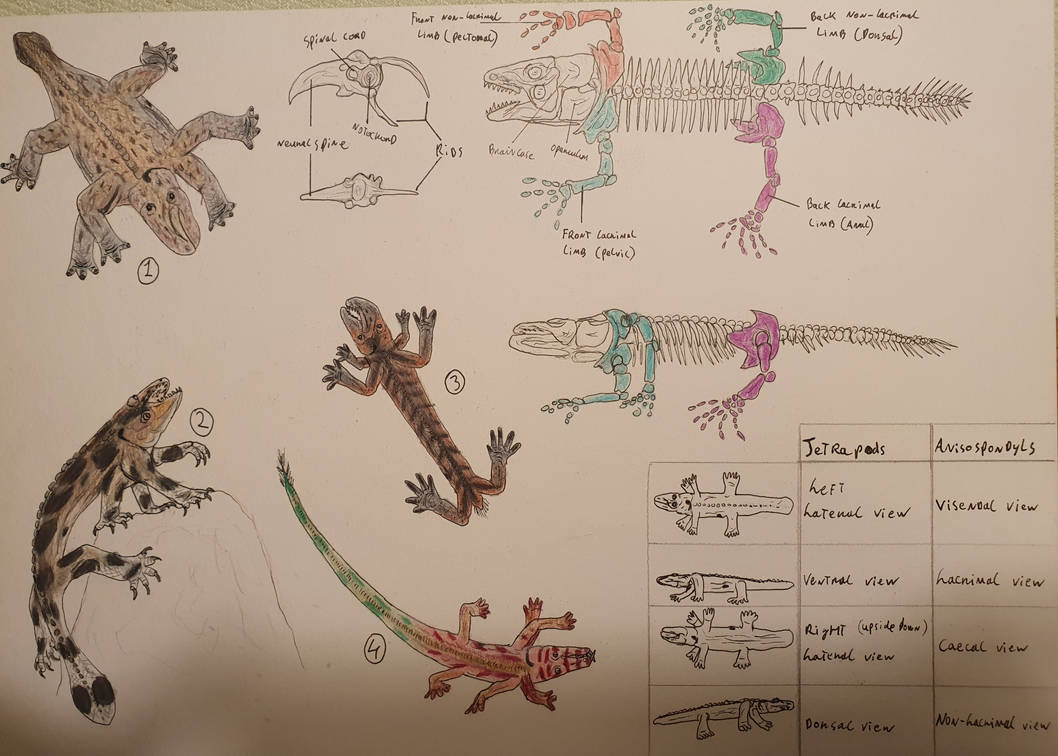
Evolution of the Flattacanths (Planosolincolae)

At some point in the Asthatian period, most likely during the late Agonian stage, Mawsoniid coelacanths of the order Lagotoichthyiiformes (bunnyfish) began adapting to a more benthic lifestyle. 

But, instead of becoming dorsoventrally flattened as most fish would, these already laterally flattened Lagotoichtyiiforms would instead evolve for life on the seafloor in a different way. Akin to the Pleuronectiformes of old Earth, these bunnyfish went through a cranial metamorphosis that saw one of their eyes migrate to the other side. This allowed them to skillfully lay flat on their sides on the sediment, becoming "flattacanths". 
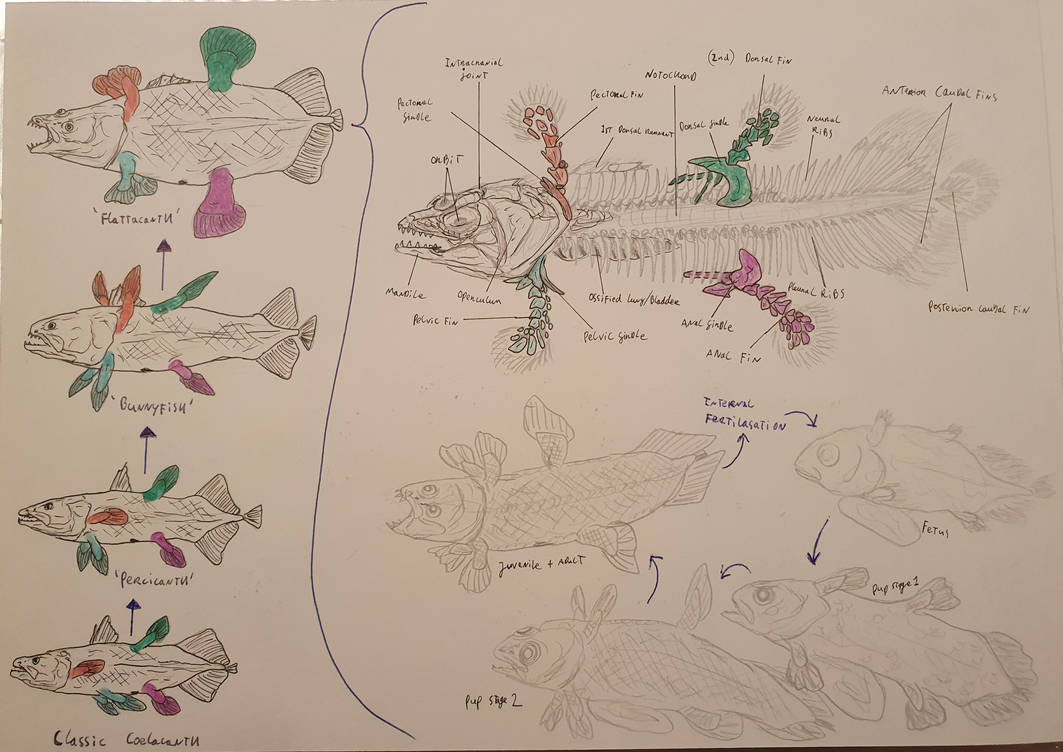

These "flattacanths" became the order Planosolincolae, and rapidly spread around the world as they faced very little competition in this new niche they created for themselves.
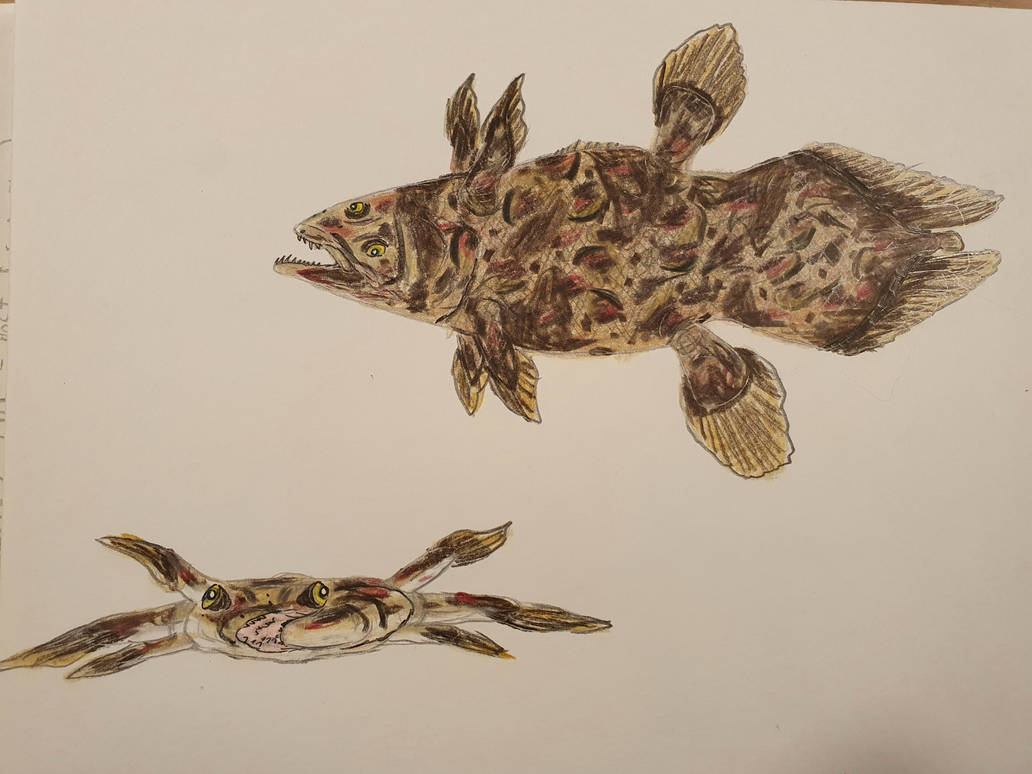

Initially they kept to shallow coastal waters and stuck to their niche. But soon they would expand into deeper waters and would even start leaving the seafloor to pursue more mobile prey.
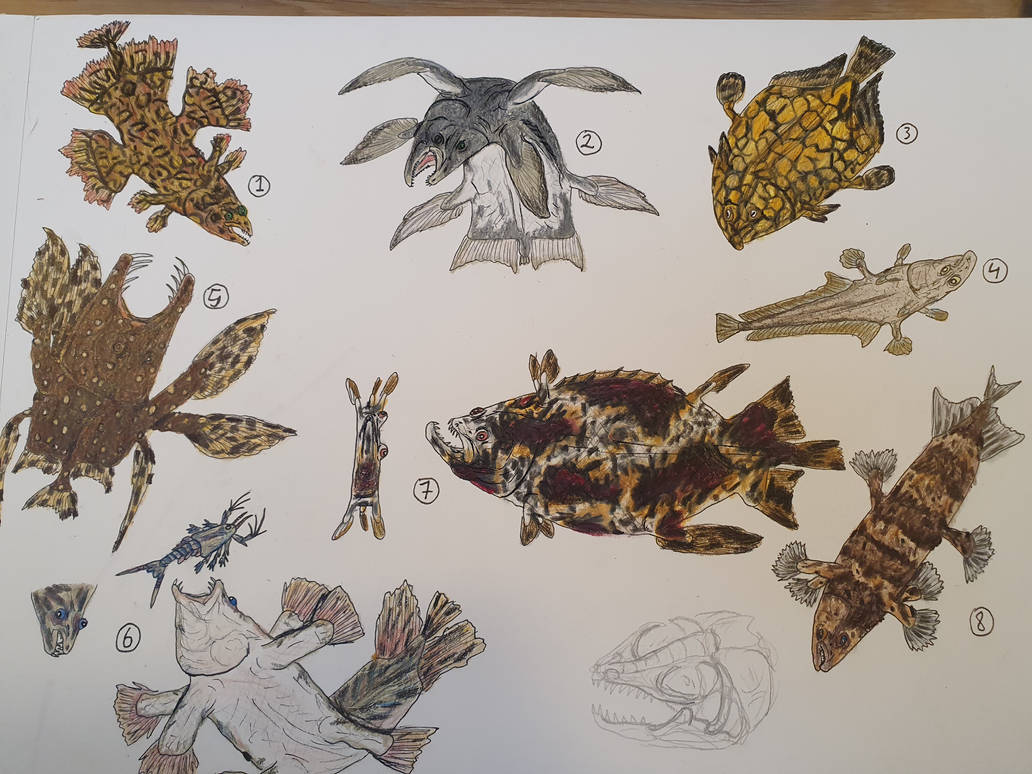
Eventually, Planosolincoles would venture into freshwater ecosystems and start exploring habitats outside the water. This would give rise to the most diverse group of flattacanths today: the terrestrial Anisospondyli. 


Tuesday, 13 May 2025

Fossil Profile: Great Flattashark


Flattacanths evolved for a benthic lifestyle, but this did not mean that’s all they could ever do. Due to the predatorial Flattacanths’ influence on their ecosystems, more and more prey items became skittish of the bottom, causing the Flattacanths to often have swim their prey down.
Some of those Flattacanths made swimming their main hunting style. Due to the arrangement of their fins, these Flattacanths didn’t use their tail to swim. This however gave them a keen advantage over other, more regular fish, with them being able to use 6 fins at once for propulsion.
These Flattacanths would become known as the “Omniswimmers”.
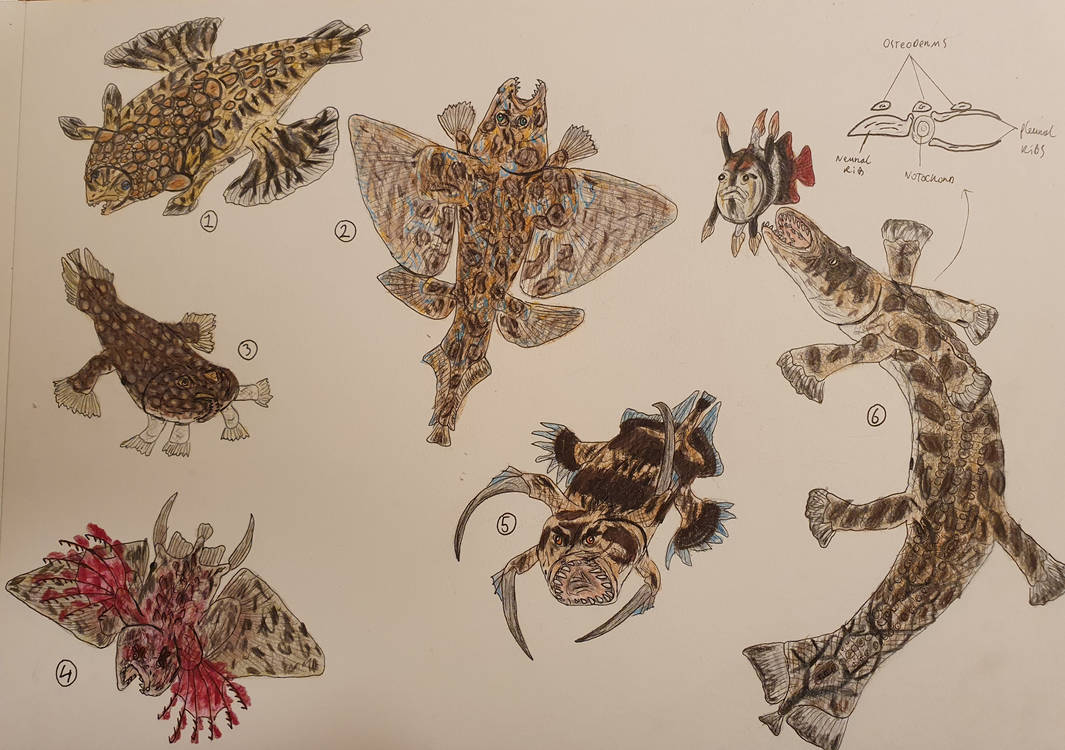
Some of these took their free swimming lifestyle to another level when they became active predators. Known as the “Flattasharks” of the family Omninectidae, these fish quickly became the apex predators of the seas around 240 million Eryobian years ago.
As a result, many of them became de-flattened and more cylindrical to better move through the water
Pictured above is the Great Flattashark, one of the biggest predators of its time. This Flattashark is a picky eater, hunting only for big fish which it shreads apart with its 6 inch long teeth.